
Types of Standard Gratings: Which One Suits Your Needs?
If you’re in need of a reliable and sturdy grating solution for your project, then you’ve come to the right place. Gratings are essential for providing safety, support, and drainage in various industries and applications.
But with so many options available on the market, how do you know which one is best suited for your needs? Don’t worry – we’ve got you covered with this post. Today, we’ll show you four popular types of standard gratings: Welded Gratings, Press-locked Gratings, Riveted Gratings, and I-Bar Gratings.
Welded Gratings
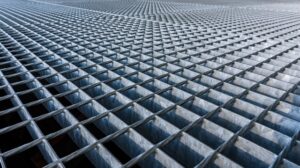 Welded gratings, as the name suggests, are made by welding bearings and cross bars together to form a sturdy structure. This type of grating is known for its solid durability and strength, making it ideal for heavy-duty applications. The welded construction ensures that the grating can withstand high loads without bending or sagging. They can also be customized to meet unique, specific requirements in terms of bar spacing, load-bearing capacity, and surface finish. This makes them suitable for a wide range of industries, such as manufacturing plants, industrial facilities, walkways, platforms, and even architectural projects.
Press-locked Gratings
Press-locked gratings are a popular choice in various industries due to their versatility and durability. These types of gratings are made by permanently locking the crossbars into position with high-pressure pressing, creating a strong and secure structure. One of the key advantages of press-locked gratings is their ability to provide excellent load-bearing capacity while maintaining an open design. This makes them ideal for applications where drainage or ventilation is necessary, such as walkways, platforms, stair treads, and industrial flooring. Additionally, press-locked gratings offer enhanced slip resistance thanks to their serrated surface. This feature helps prevent accidents caused by slipping in areas that may be exposed to liquids or other slippery substances.
Riveted Gratings
Riveted gratings, just like the name suggests, are constructed by riveting together individual bearing bars and crossbars. This process creates a strong and durable grating that is ideal for heavy-duty applications. The best thing about riveted gratings is their ability to withstand heavy loads. The tight connection between the bearing bars and crossbars ensures stability and prevents any movement or deformation under intense pressure. These gratings are commonly used in areas where there is a need for high strength and durability, such as industrial walkways, platforms, stair treads, and trench covers.
I-Bar Gratings
 I-Bar Gratings offer a unique design that sets them apart from other types of gratings. These gratings are characterized by their I-shaped bearing bars, which provide excellent strength and durability. The I-bars are usually spaced further apart than the bearing bars in other types of gratings, making them ideal for applications where debris or water drainage is necessary. One advantage of I-Bar Gratings is their ability to withstand heavy loads without the need to sag or bend them. This makes them suitable for use in areas with high foot traffic or heavy equipment.…